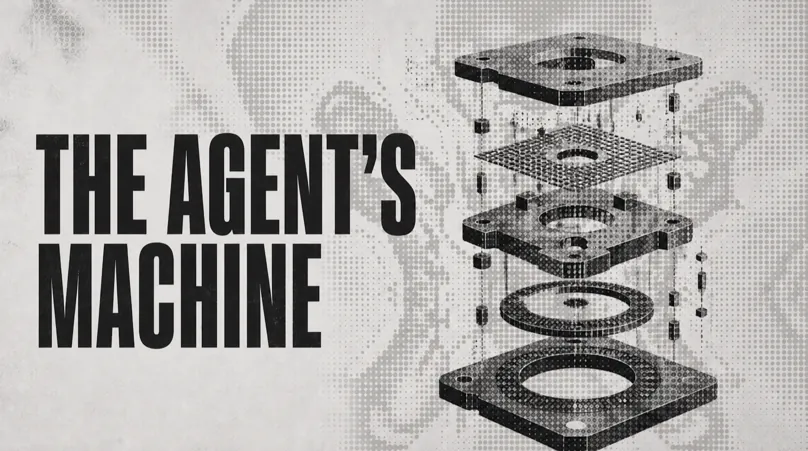
Why ERIKA is an operating system, not an app
An app can host a conversation. An operating system can hold a resident, its environment, and the continuity of its work.
ERIKA is an operating system because the things that make an agent continuous and governable have to exist beneath any one application. Identity, memory, goals, tools, accounts, permissions, evidence, and recovery cannot be reliable if they live as optional attachments to a chat.
- An app is one tool inside an environment. ERIKA is the environment.
- The model supplies cognition but does not own the system.
- One OS instance maps to one persistent identity.
- Browser, files, approvals, and recovery share the same governed boundary.
Where the responsibility belongs
Calling something an operating system is not a branding move. It is a claim about responsibility. The operating system decides what processes exist, what resources they can reach, how state persists, and how failures are handled. For a persistent agent, those decisions define whether the agent is real or merely simulated for the duration of a request.
An assistant inside an application inherits the application's boundary. It sees the context that app provides, uses the accounts the app connects, and disappears when that session ends. Expanding the app with more integrations can make it powerful, but the center remains a temporary interaction.
ERIKA reverses the relationship. Applications become tools available to the resident. The resident's identity, memory, and authority are not owned by any one of them.
The model is a tenant
The most capable model in the system is still not the operating system. It should receive the context needed for the present decision, call the tools it has permission to use, and return work to a durable environment.
This matters because models change. A new model may reason better, run locally, cost less, or suit a particular task. If the model owns identity and memory, replacing it risks replacing the agent. If the operating system owns continuity, the model can be upgraded without erasing the resident.
Bounding the model also creates a clearer security architecture. The system can decide which memories enter a context window, which accounts a model may act through, which actions require approval, and which evidence must be recorded. Authority is granted by the environment, not improvised inside a prompt.
The practical test
The architecture earns the name only if it changes what a person has to do. Can the resident return to unfinished work after a restart? Can it explain which source led to an action? Can a model be swapped without losing the agent's obligations? Can permissions be revoked in one place? Can a failed process recover without a person rebuilding all of its context?
Those are operating-system questions. They are also the route to making computer work optional, because continuity can no longer depend on the human hovering around the workflow.
The full ERIKA system is in active development. Some implementation choices remain open, and performance claims still need measurement. The boundary is the durable part: one persistent resident, one governed environment, and replaceable cognition inside it.