
Why Your Website Isn’t Generating Leads (and the 7 Things to Fix Today)
Your website looks fine. Maybe even great. But the phone isn’t ringing and the contact form sits empty. You’re not alone. According to WordStream’s analysis of thousands of landing pages, the median conversion rate across industries is just 2.35%, with the top 25% of sites converting at 5.31% or higher. For most service businesses, that means 95 out of every 100 visitors leave without doing anything.
The good news? The reasons a website isn’t generating leads are almost always fixable. They’re not mysterious algorithm problems or bad luck. They’re specific, identifiable issues with your site’s speed, messaging, calls to action, and mobile experience. And every single one of them can be addressed today.
This guide walks through the seven most common reasons service business websites fail to convert visitors into leads, and what to do about each one.
- Most service business websites convert under 3% of visitors, but top performers hit 5-10% (WordStream).
- Page speed, mobile design, and clear CTAs are the three biggest conversion killers.
- Simple fixes like reducing form fields and adding trust signals can double your lead volume.
- You don’t need a full redesign. Targeted changes deliver fast results.

1. Is Your Website Too Slow to Keep Visitors Around?
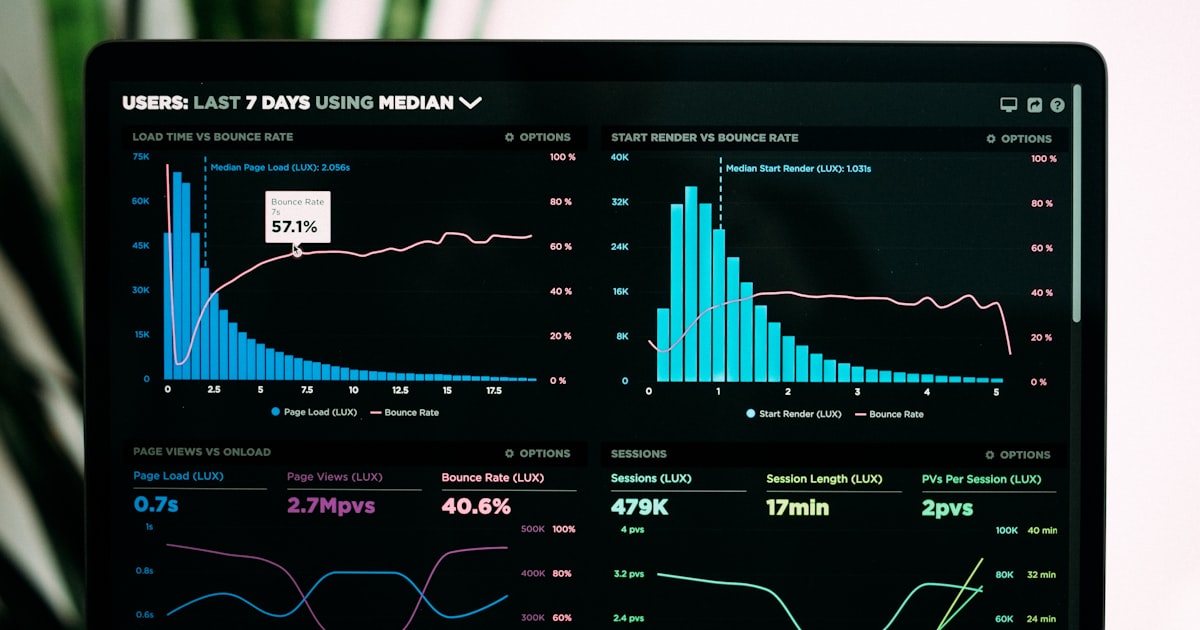
Page speed is the silent lead killer. Google’s own research found that as page load time increases from 1 second to 3 seconds, the probability of bounce increases by 32% (Think with Google, 2018). Push that to 5 seconds and bounce probability jumps to 90%. If your site takes more than 3 seconds to load, you’re losing leads before anyone even sees your homepage.
Here’s what slows most service business websites down: oversized images, cheap shared hosting, unoptimized code, and too many plugins. A plumber’s site with a 6MB hero image of a wrench isn’t doing anyone any favors.
Quick Speed Fixes You Can Do Today
Compress all images using a tool like ShortPixel or TinyPNG. Switch to a faster hosting provider, something like Cloudways or SiteGround. Remove plugins you’re not actively using. Enable browser caching. These four changes alone can cut load times in half.
Test your site right now at Google PageSpeed Insights. If you’re scoring below 50 on mobile, speed is likely your biggest conversion problem.
2. Does Your Site Actually Work on Mobile?
Mobile traffic now accounts for roughly 60% of all web traffic worldwide (Statista, 2025). For local service businesses, that number is often higher because people search for plumbers, electricians, and roofers from their phones, usually in a moment of urgency. If your website isn’t genuinely easy to use on a phone, you’re invisible to most of your potential customers.
“Mobile-friendly” doesn’t just mean the site shrinks to fit the screen. It means buttons are large enough to tap. Phone numbers are clickable. Forms are short and easy to fill out with a thumb. Text is readable without pinching and zooming.
What a Mobile-First Service Site Looks Like
The best-converting mobile service sites we’ve seen share a few traits. They put the phone number in a sticky header. They use a single-column layout. The primary CTA is visible without scrolling. And they load fast, under 3 seconds on a 4G connection.
In our experience working with service businesses, switching from a desktop-first to a mobile-first design has consistently improved lead form completions by 25-40%. The phone was always there. The design just wasn’t built for it.
3. Are Your Calls to Action Clear and Specific?
A HubSpot study found that personalized CTAs convert 202% better than generic ones (HubSpot, 2023). Yet most service business websites still rely on a lonely “Contact Us” button buried in the navigation. That’s not a call to action. That’s a suggestion hidden in a corner. If your website isn’t generating leads, weak CTAs are almost certainly part of the problem.
Think about what your visitor actually wants. A homeowner with a leaking pipe doesn’t want to “contact” anyone. They want to “Get Emergency Plumbing Help Now.” A property owner looking for landscaping doesn’t want to “learn more.” They want to “Get a Free Estimate.”
CTA Placement That Drives Conversions
Place your primary CTA above the fold on every page. Repeat it after every major section. Use contrasting colors so it stands out from the rest of the page. And make sure the button text describes the outcome, not the action.
Good examples: “Get My Free Quote,” “Book a Same-Day Appointment,” “See Pricing for My Area.” Bad examples: “Submit,” “Click Here,” “Contact Us.” The difference sounds small, but it compounds across hundreds of visitors each month.

4. Why Is Nobody Filling Out Your Contact Form?
Form length directly impacts conversions. Research from Unbounce’s Conversion Benchmark Report shows that forms with 3 fields or fewer convert at nearly 25%, while forms with 6 or more fields drop below 15% (Unbounce, 2021). Every extra field you add creates friction, and friction kills leads. If you’re asking for a mailing address before someone even knows your pricing, you’ve lost them.
For most service businesses, you only need three things at the initial contact stage: name, phone number or email, and a brief description of the problem. Everything else can be gathered during the follow-up call.
Form Optimization Tips
Remove every field that isn’t absolutely necessary for your first response. Use placeholder text inside the fields to guide users. Add a privacy reassurance line like “We’ll never share your info.” And make sure the submit button says something specific, like “Request My Free Quote,” not just “Submit.”
Here’s something most web designers won’t tell you: for service businesses, a phone number prominently displayed often outperforms a form entirely. Many homeowners, especially older ones, still prefer to call. Give them both options and let the customer choose.
5. Do Visitors Trust Your Business Within 5 Seconds?
According to a study from the Stanford Web Credibility Research Project, 75% of users judge a company’s credibility based on its website design (Stanford Persuasive Technology Lab). That judgment happens fast, often within seconds. If your site looks outdated, lacks social proof, or doesn’t show real evidence that you do quality work, visitors bounce to a competitor’s site before they even read your services list.
Trust signals aren’t optional. They’re the foundation everything else sits on. Without them, fast load times and great CTAs won’t matter.
Trust Elements Every Service Website Needs
Start with Google reviews. Embed them directly on your homepage and service pages. Add photos of your actual team, not stock photos. Display license numbers, insurance badges, and any industry certifications. Include logos of brands you’re affiliated with or products you install.
Before-and-after photos are incredibly powerful for contractors. A roofer showing a storm-damaged roof next to the finished repair tells a story that no amount of copywriting can match. Real work builds real trust.
And don’t forget the basics. A physical address, a real phone number, and a professional headshot of the business owner go a long way. People hire people they feel they know.
6. Is Your Website Speaking to the Right People?
Poorly targeted messaging is one of the most overlooked reasons a website isn’t generating leads. A report from the Content Marketing Institute found that 63% of businesses don’t have a documented content strategy tied to their audience (CMI, 2024). When your website tries to talk to everyone, it connects with no one. Service businesses need copy that speaks directly to their ideal customer’s specific pain point.
A dentist in Phoenix and a dentist in Portland serve different communities with different concerns. A generic “We provide quality dental services” headline doesn’t resonate with either audience.
How to Fix Your Messaging Today
Write down the top three problems your best customers come to you with. Then make sure your homepage headline addresses one of them directly. “Emergency AC Repair in Houston, Available 24/7” beats “Welcome to Smith HVAC” every single time.
We’ve found that when service businesses rewrite their homepage to lead with the customer’s problem instead of the company’s history, conversion rates typically jump 15-30% within the first month. People don’t care about your founding story when their basement is flooding.
Use the language your customers actually use. If homeowners search for “clogged drain fix near me,” don’t write “comprehensive drainage remediation services.” Match their words. Match their urgency. That’s how you earn their click and their call.
7. Are You Following Up Fast Enough?
Lead response time matters more than most businesses realize. According to research from Lead Connect, 78% of customers buy from the first company that responds to their inquiry (Lead Connect). And a study published in the Harvard Business Review found that companies responding within 5 minutes are 100 times more likely to connect with a lead than those waiting 30 minutes (HBR, 2011). Your website might actually be generating leads, but slow follow-up kills them before they become customers.
This isn’t just about checking your email more often. It’s about building systems that make fast response automatic.
Building a Response System That Works
Set up instant email and SMS notifications for every form submission. Use a CRM or even a simple tool like Google Forms plus Zapier to route leads to your phone immediately. If you can’t respond within 5 minutes during business hours, consider a virtual receptionist or an AI chatbot to acknowledge the inquiry and set expectations.
The website’s job is to generate the lead. Your job is to close it. And closing starts the moment that form is submitted, not when you get around to checking your inbox after lunch.

Frequently Asked Questions
What is a good conversion rate for a service business website?
The average website converts at about 2.35%, but top-performing sites reach 5-10% (WordStream). For local service businesses like plumbers or HVAC contractors, a realistic target after optimization is 3-7%. If you’re below 2%, there are significant improvement opportunities on the table.
How do I know if my website is too slow?
Run your site through Google PageSpeed Insights. A mobile score below 50 indicates serious speed issues. Your site should load in under 3 seconds. Anything slower and you’re likely losing more than half your mobile visitors before they see any content (Think with Google).
Should I use a chatbot on my service business website?
A chatbot can help if it’s set up well. It works best as a backup for when you can’t respond instantly to form submissions. Keep it simple. Have it collect the visitor’s name, contact info, and service need. Don’t try to make it handle full conversations. The goal is capturing the lead, not replacing human interaction.
How many pages does my website need to generate leads?
Quality beats quantity. At minimum, you need a strong homepage, individual service pages for each offering, an about page with trust signals, and a contact page. Service-specific landing pages tend to convert better than generic ones because they match the visitor’s search intent more closely.
How often should I update my website to maintain lead flow?
Review your website’s performance monthly. Check analytics for bounce rates, time on page, and form submission rates. Update testimonials and project photos quarterly. Refresh your copy whenever your services or target areas change. Websites that sit untouched for years gradually lose both rankings and conversions.
Want a Website That Actually Generates Leads?
We’ll audit your site and show you exactly what’s costing you customers.